

REGENERATIVE Agriculture
For the Cantons distillery, regenerative agriculture is not just a choice, but a true philosophy rooted in its fundamental values.
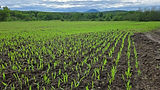
Regenerative agriculture promotes biodiversity and the health of local ecosystems.
By using environmentally friendly farming practices such as crop rotation, soil conservation and the preservation of natural habitats, the distillery helps preserve the richness and vitality of the land that nourishes it.
Our fields and crops form a living and dynamic ecosystem, where each plant plays a crucial role in the creation of exceptional spirits.
The Distillerie des Cantons de l'Est adopts a "from the earth to the bottle" philosophy by cultivating its own grains in order to control the origin of its ingredients and create unique, authentic spirits that express the distinctive character of the Eastern Townships.

Crop rotation is an integral part of our agricultural management and helps maintain soil fertility, prevent resource depletion and improve overall crop health.
Our cereals
Cereal cultivation plays a central role in a sustainable agricultural approach.

Barley: the iconic ingredient of whisky
Our barley is carefully cultivated for optimal quality. Local barley cultivation allows us to showcase the specific characteristics of the terroir and create unique whiskies. Investment in agricultural equipment has helped optimize harvests.

Rye gives whisky distinctive flavors, complexity and depth.
By growing our own rye, we ensure we obtain superior quality ingredients. Rye imparts unique flavors to the whisky, giving it spicy, peppery, and sometimes fruity notes. While this practice requires rigorous soil management, it aligns with our commitment to sustainable production.

The distillery planted 75 plum trees of various species in April 2023, with a view to producing plum alcohols such as brandy or schnapps.
It is noted that 10 kg of plums are needed per liter of alcohol, and therefore patience will be required to complete this production.


Oak plantation
Wise is the man who plants trees in whose shade he will never sit.
A long-term initiative, the project involves cultivating American white oak trees with the intention of using them for cask production when they are mature, in about 30 years or more.
In the meantime, several of these oaks have been inoculated with black truffle spores: a promising side project that could lead to truffle production and whose ultimate goal is to add a unique sensory dimension to our spirits.

Oaks and truffles: a true symbiosis
There is a close and lasting interaction between the two living organisms where both parties benefit from this association.
By connecting to the roots of oak trees (mycorrhization), truffles facilitate the absorption of resources from the soil. The oak trees, through photosynthesis, produce the sugar vital to the truffles. It's a fair exchange, where each receives what it needs. This mutually beneficial cooperation is the key to their shared prosperity.